A DESIGN SYSTEM A MACHINE CAN ACTUALLY RUN
The Agentic Design System isn't about getting AI to draw components for me. It's the opposite: restructuring InstemUX so an agent can work inside it, auditing tokens, catching the drift between Figma and code, and keeping both sides honest, without me watching every corner of it. A system built less as documentation for developers, more as instructions for a machine.
It always starts tidy. Then the Figma library says one thing, the code says another, the docs say a third, and nobody trusts any of them.
It isn't laziness. Keeping all of it in sync is relentless, unglamorous work, the first thing to slip when there's a deadline.
Asking an AI to generate the system doesn't fix that. Generate it and it's frozen the moment it's made.
DON'T GENERATE IT. STRUCTURE IT.
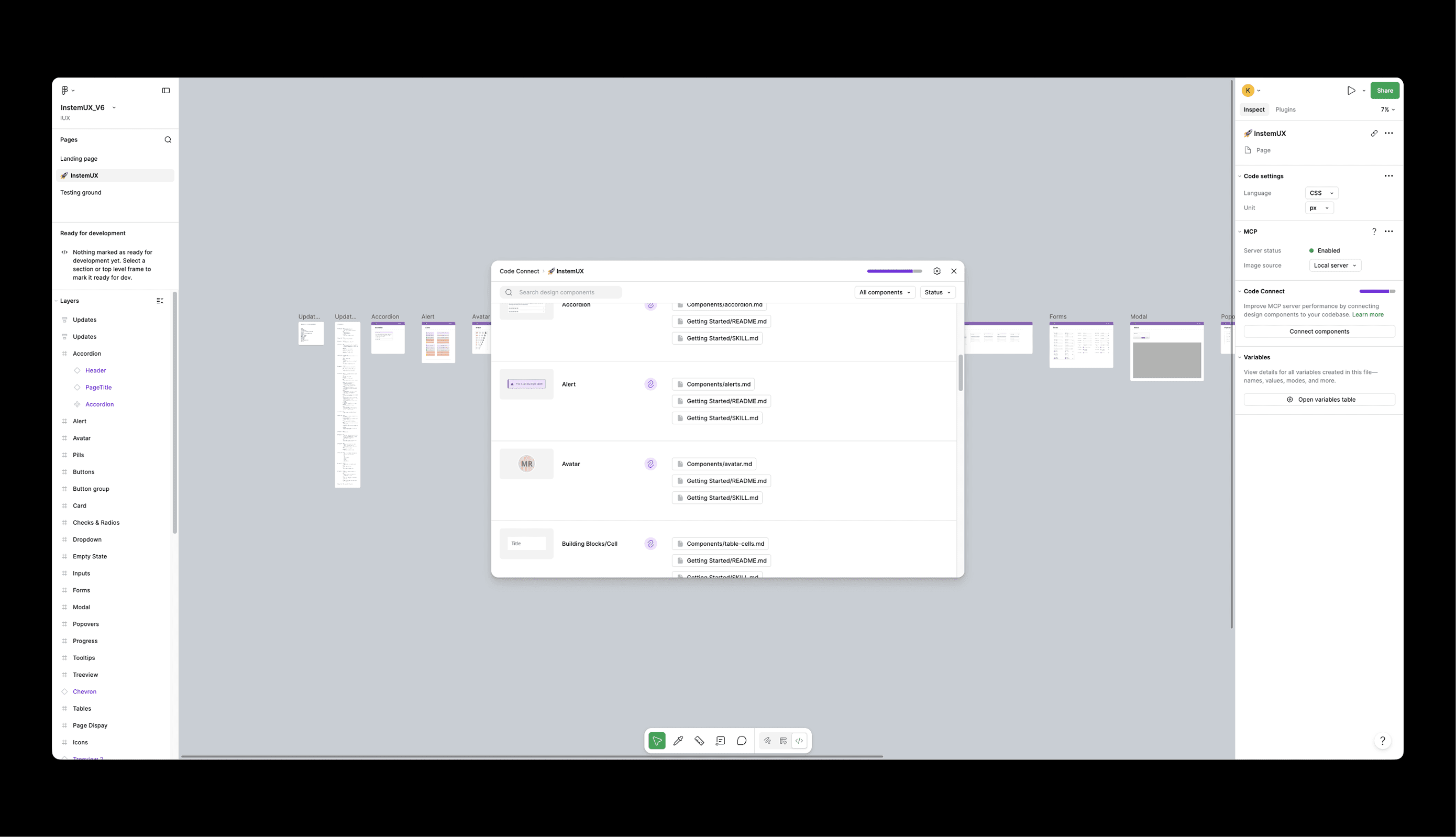
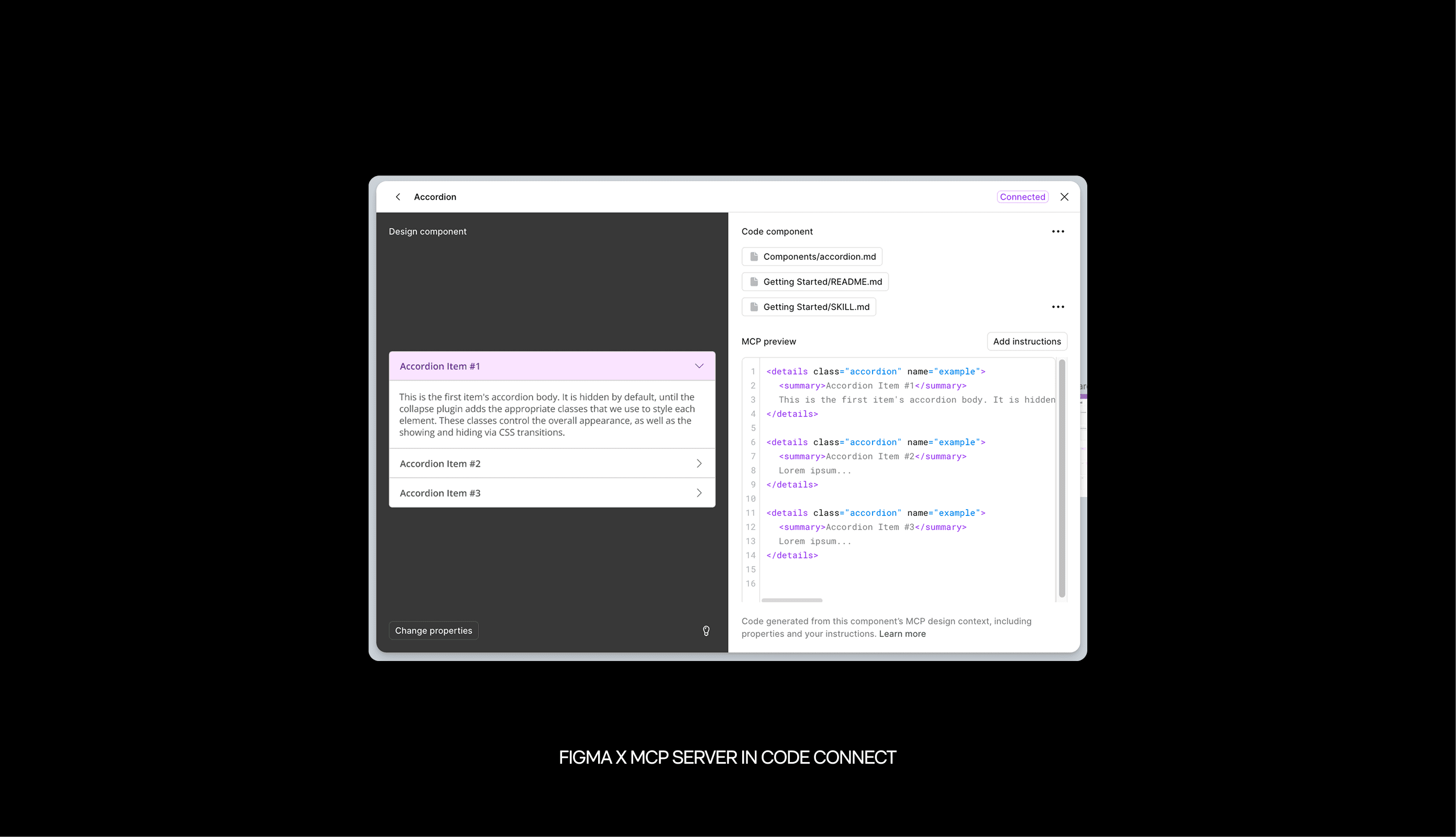
So the work wasn't prompting for output. It was building a system an agent could reason about, where the naming, the structure and the Figma all line up so a machine can follow them.
Get the structure right and the agent does the upkeep. Get it wrong and no amount of AI saves you.
TOKENS A MACHINE CAN FOLLOW
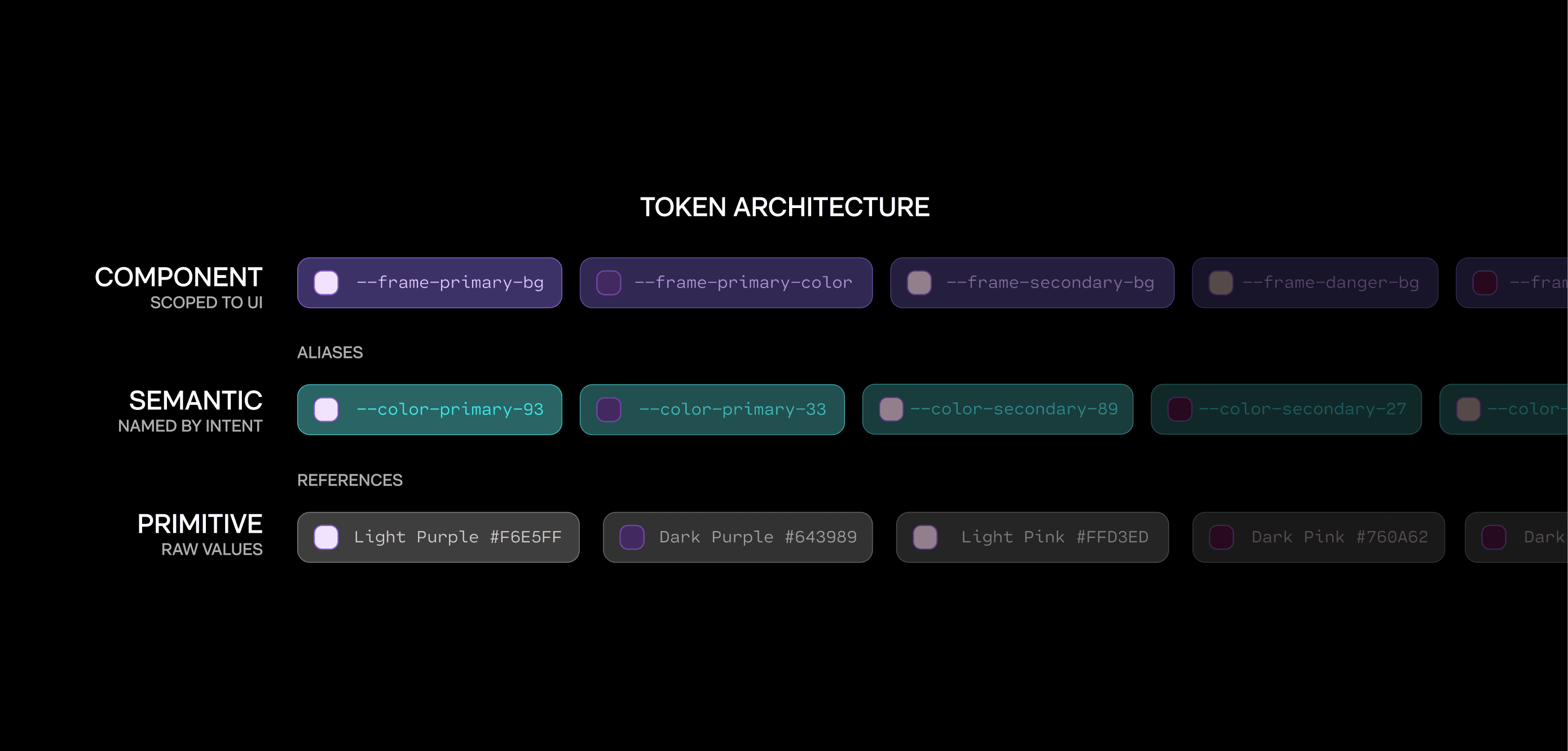
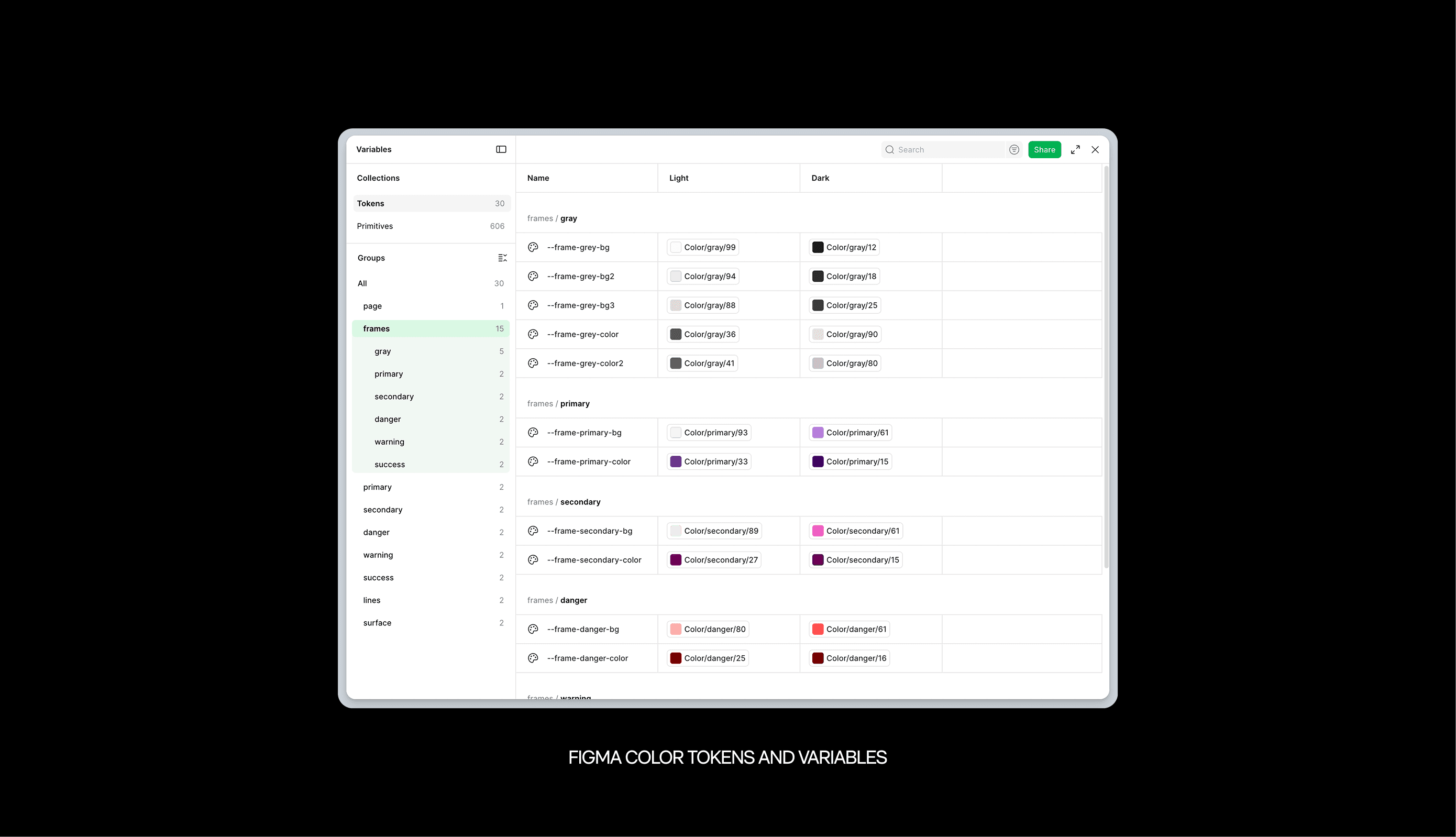
Underneath it all is a layered token system: raw values at the bottom, intent-based names in the middle (text, surface, border, state), component-scoped tokens on top.
That layering is the whole trick. The agent never needs to understand colour or type, it just follows the chain from intent to value. And because every token in code has a twin in Figma, an agent reading one file knows exactly what an agent reading the other knows.
Dark mode is the proof: swap what the middle layer points to, and every component follows. Nothing has to be told.
ONE PROMPT, REAL JUDGMENT
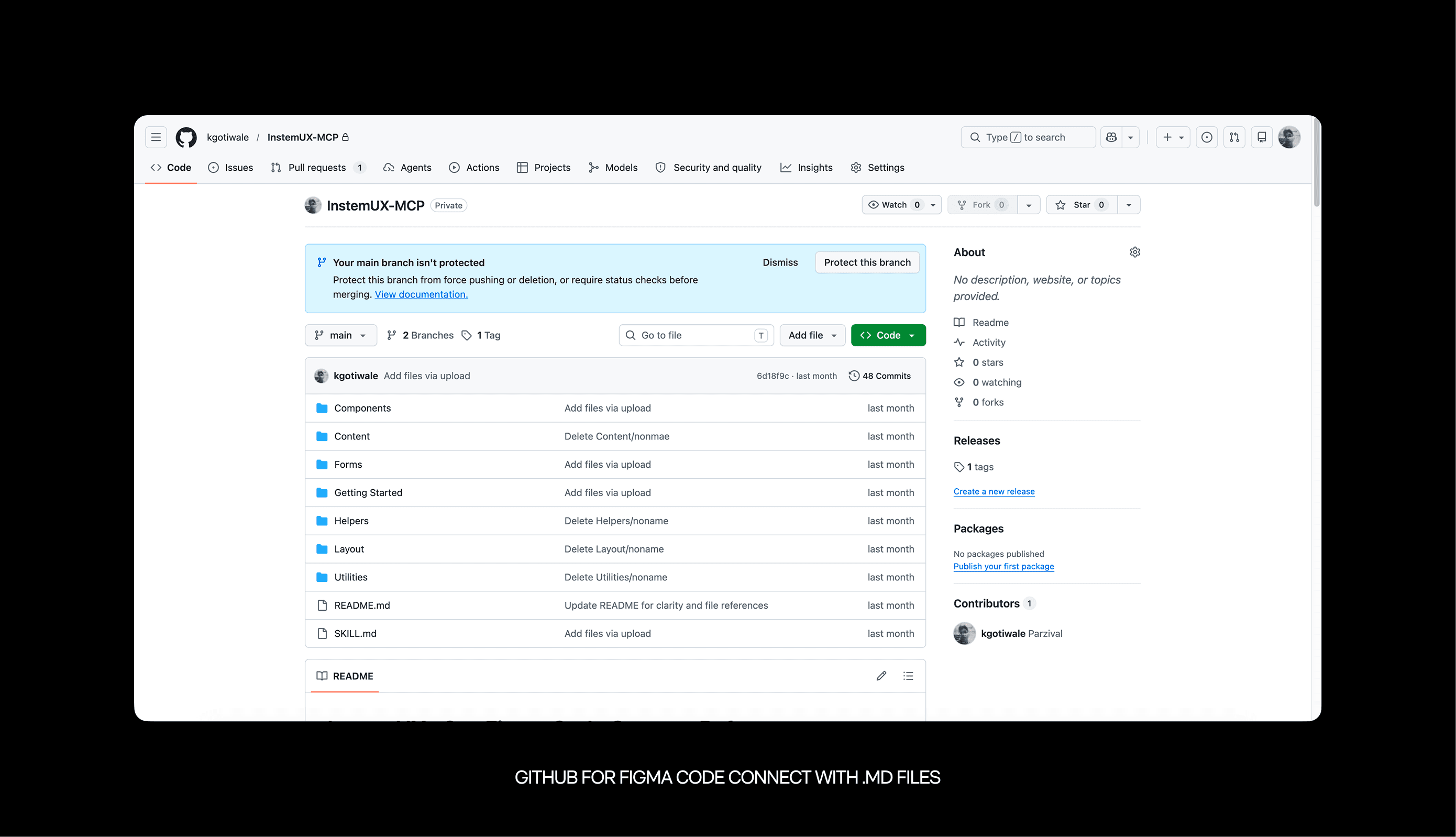
With the system structured, the agent could take on the jobs a designer usually does by hand — from a single prompt, making its own calls:
• Audit code against Figma and flag everything that's drifted
• Spot near-duplicate tokens doing the same job and consolidate them
• Grep every token against every component and clear out the dead ones
• Catch the screen using the wrong typeface and put it right
It wasn't following a script. Given “check if these are in sync,” it decided how to check, what to cross-reference, and what to hand back.
Same prompt, same standard, every time.