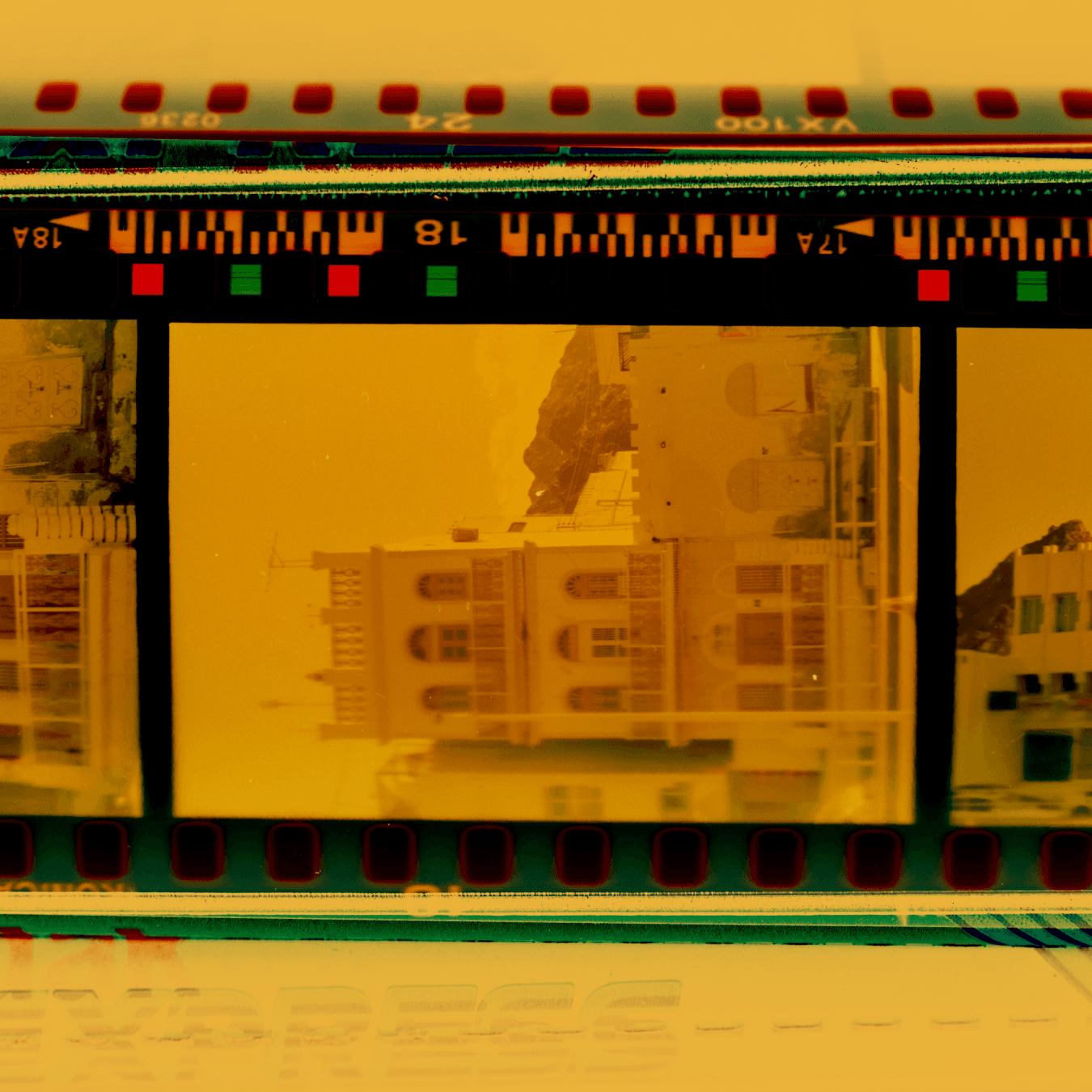
Fourteen generations, bound into one book
In Their Wake is the story of a family that crossed the Indian Ocean for two centuries, Gujarati merchants who made a home in Oman, traced through fourteen generations and one house on the Muttrah Corniche. Hassan Haider wrote it. I led the design: giving a sprawling oral history a form strong enough to carry its weight.
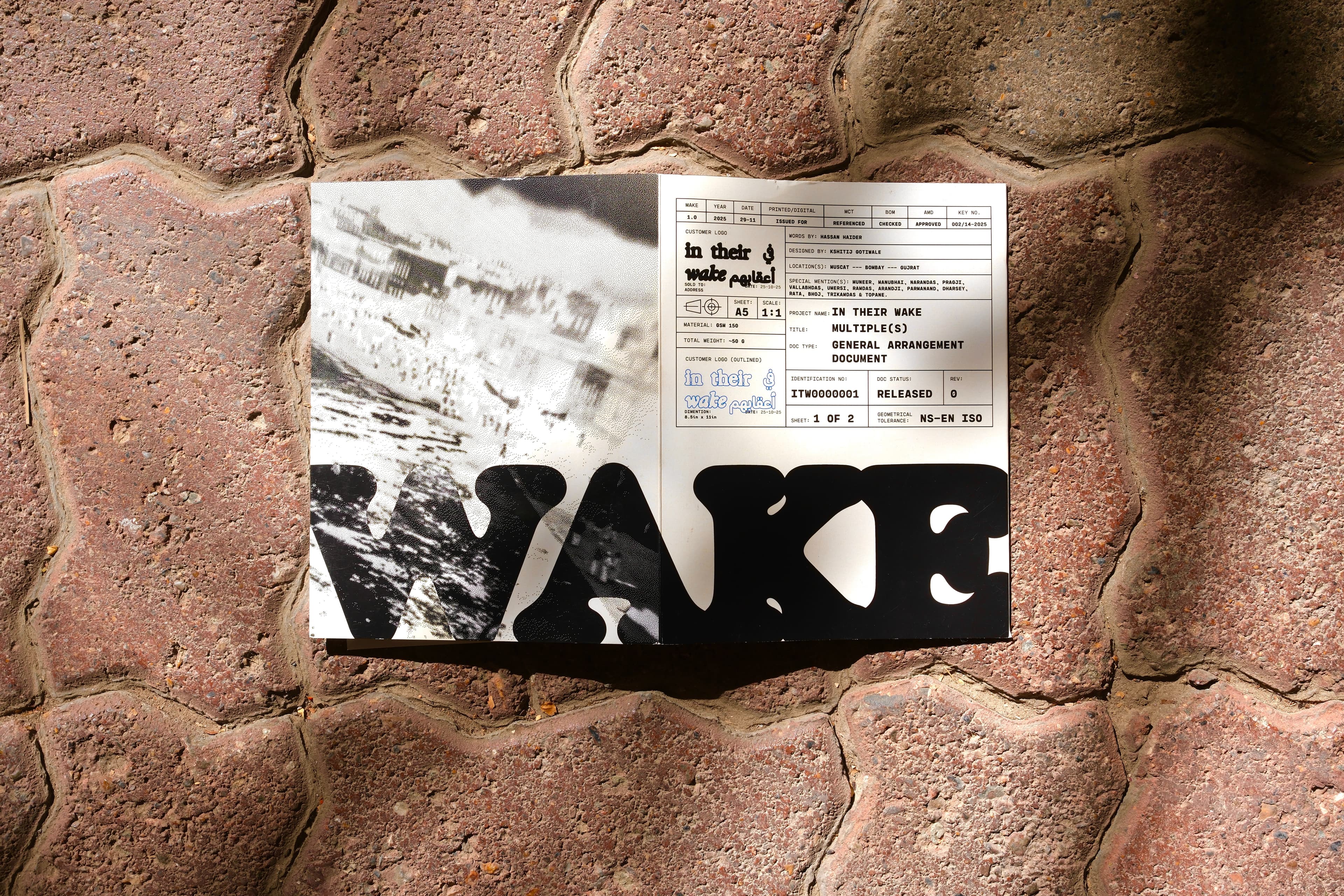
Memory doesn't move in straight lines. It loops, doubles back, drops a thread in 1797 and picks it up in 1933. The interview wanders the way real talking wanders.
Tidying that into a neat timeline would have killed the thing that makes it alive.
So the design doesn't fix the mess. It makes the mess navigable.
Type that knows who's speaking
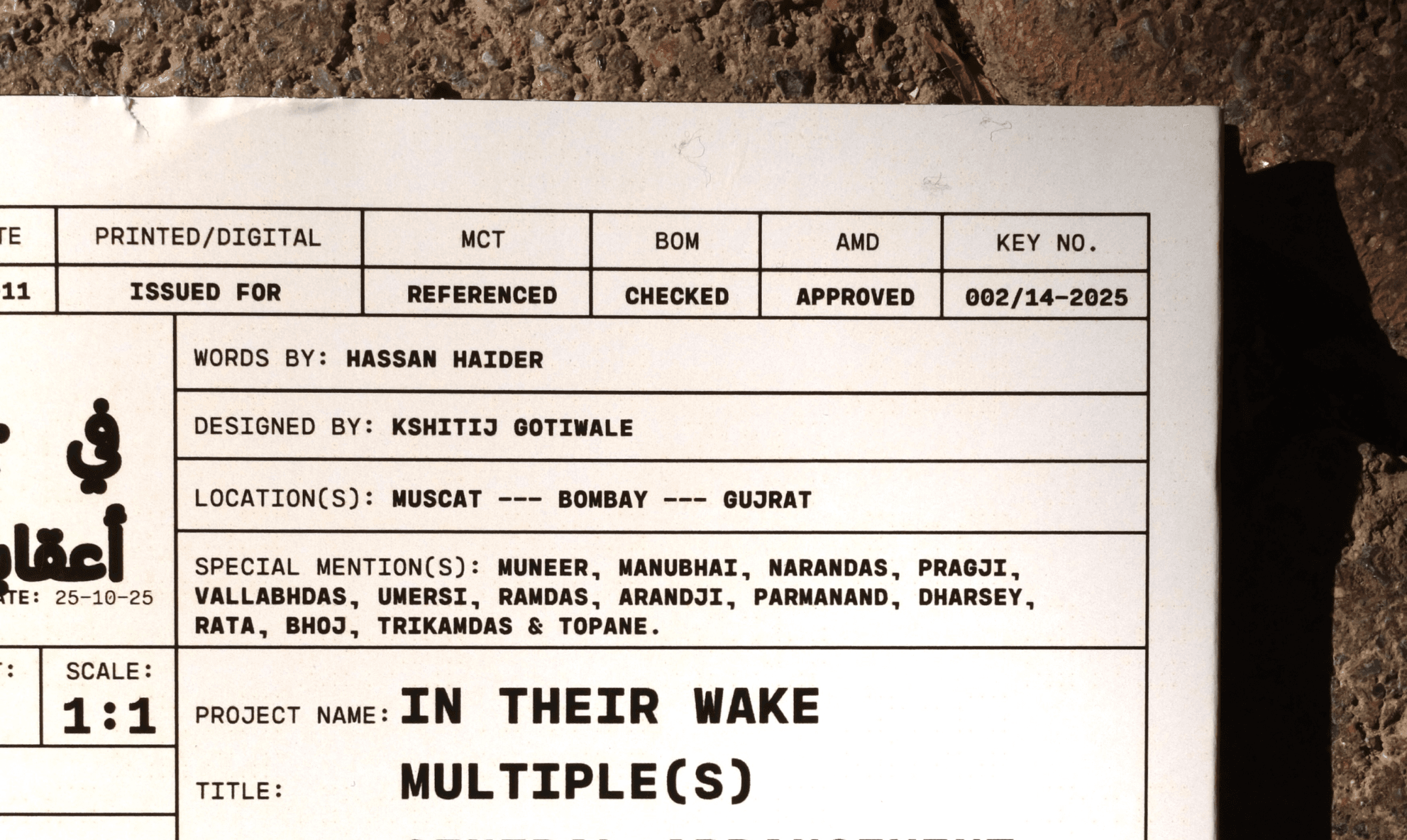
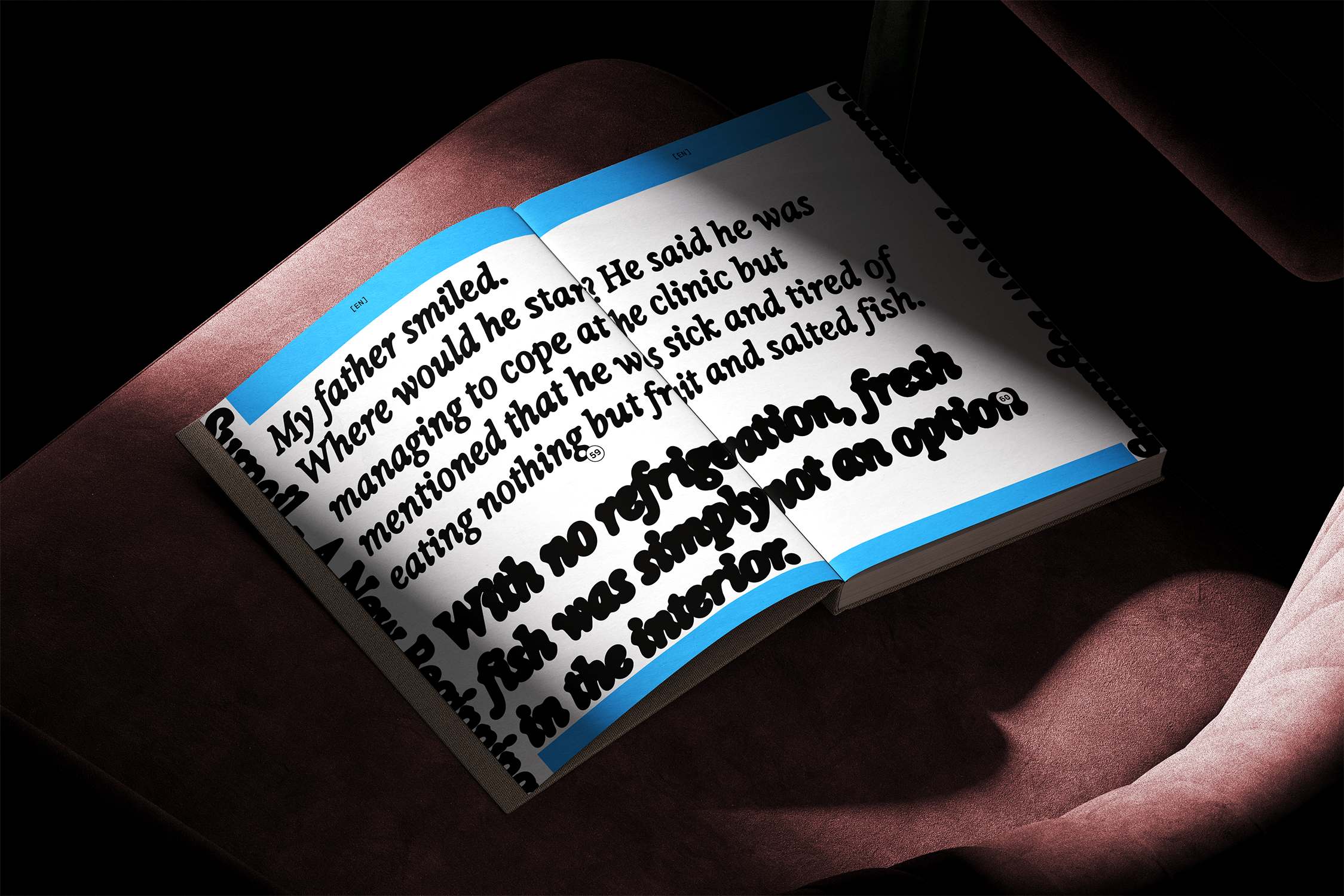
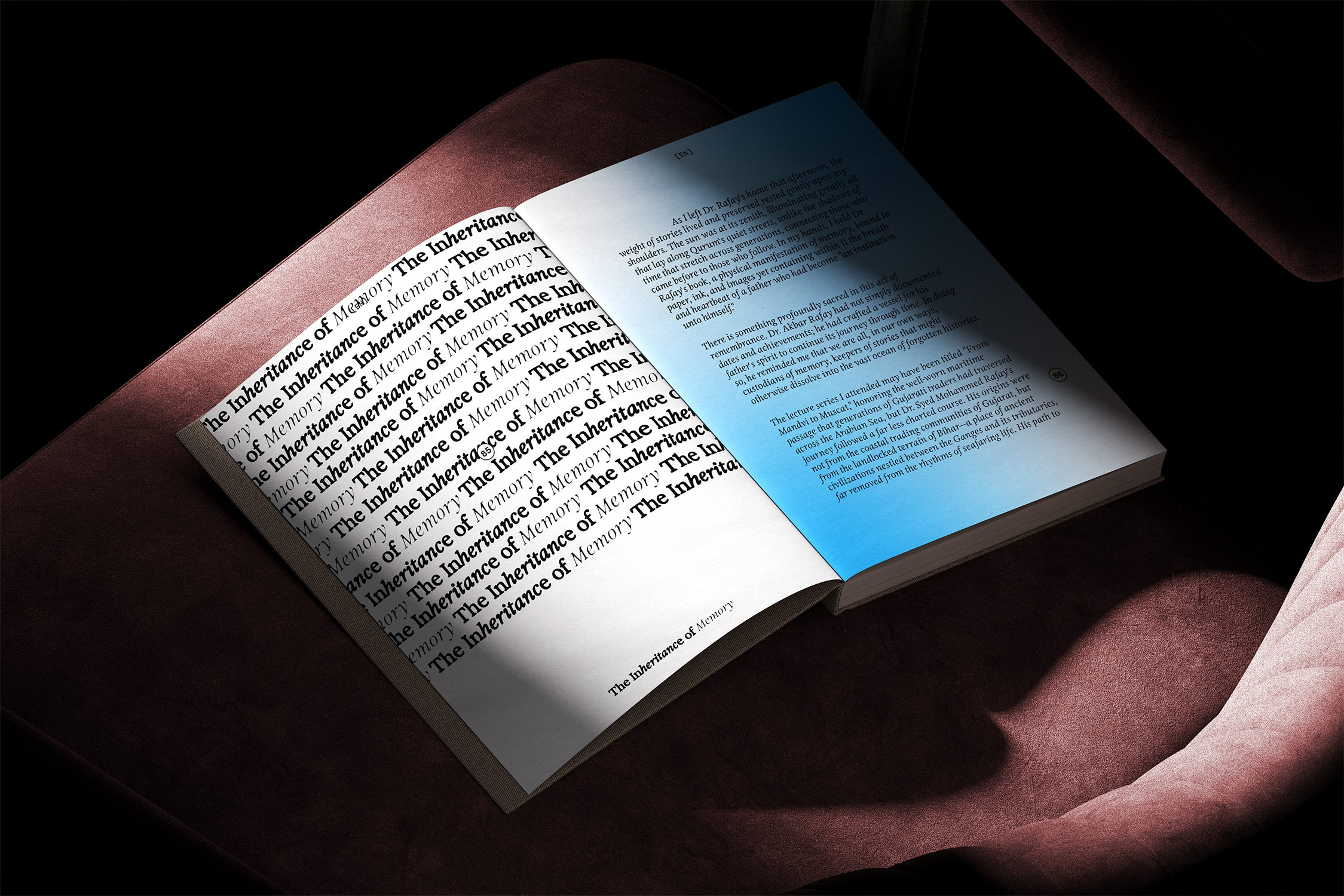
The book holds several voices at once, the narrator, the man telling his family's story, and the moments where history simply lands.
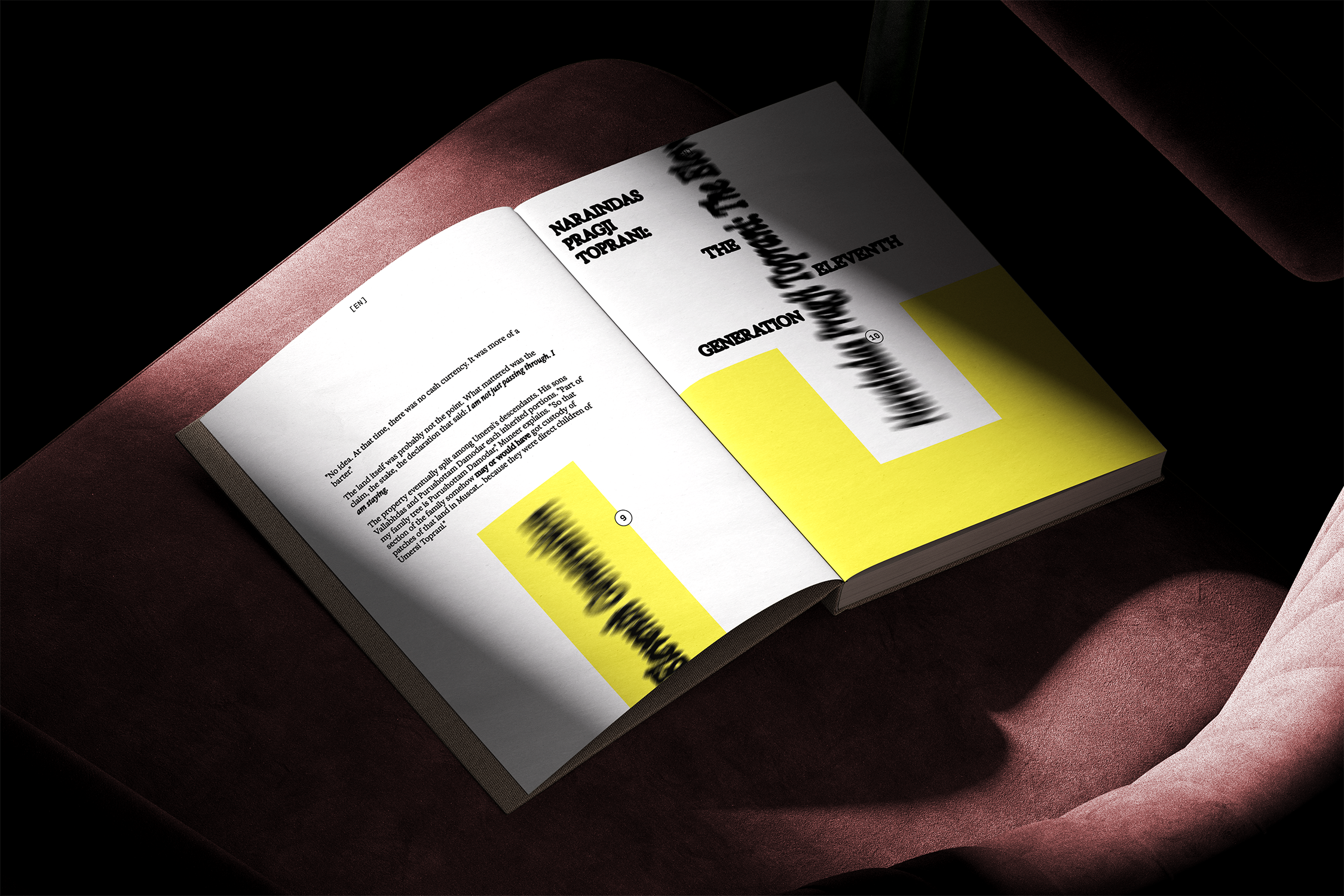
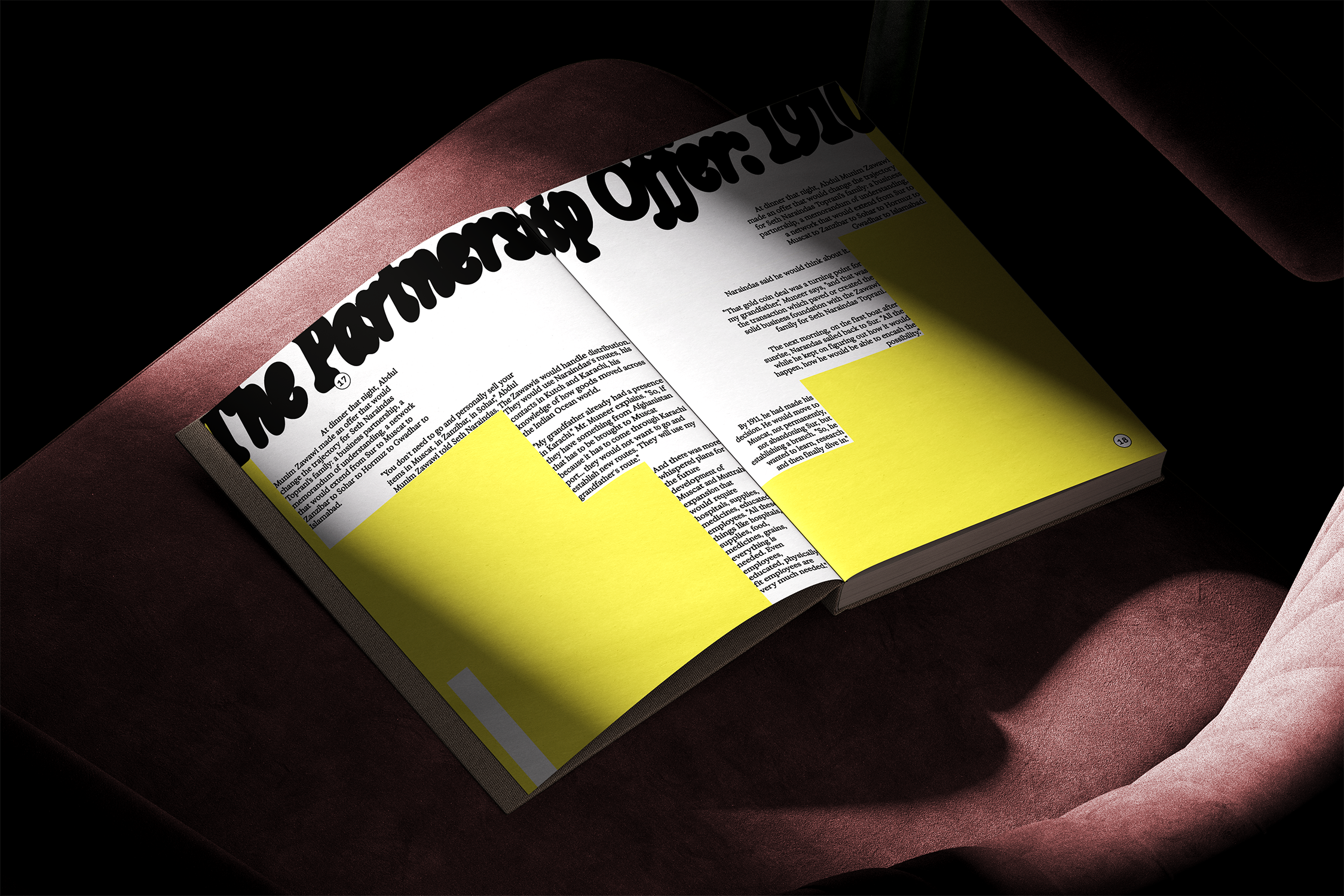
So I let the typography change register with them. Running text for the telling. A different face entirely when a sentence needs to stop you — a route established, a child's impossible prayer, a name carried across centuries. The big type isn't decoration; it's the book raising its voice.
Type is the difference between someone talking and history landing.
A century of paper, made urgent
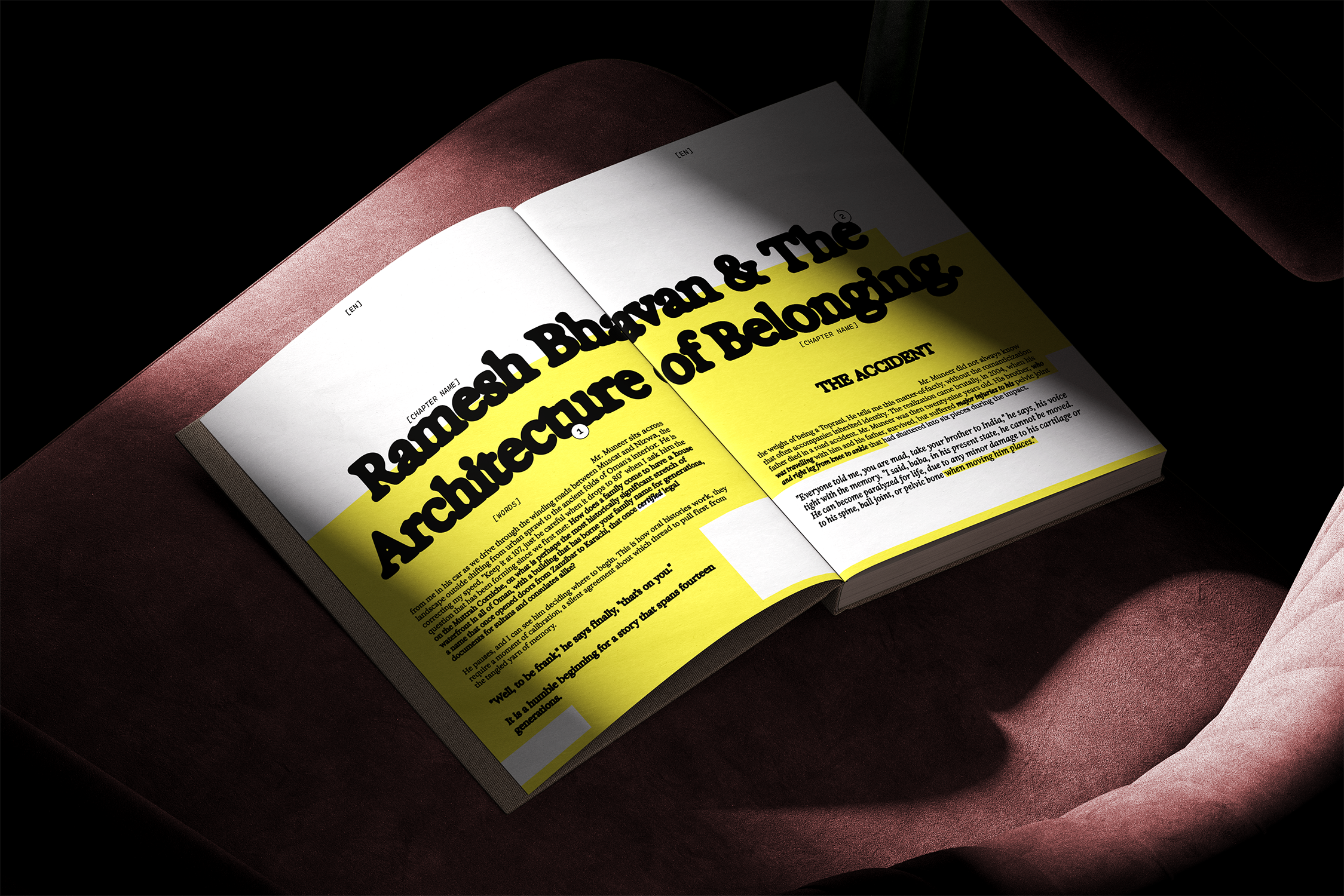
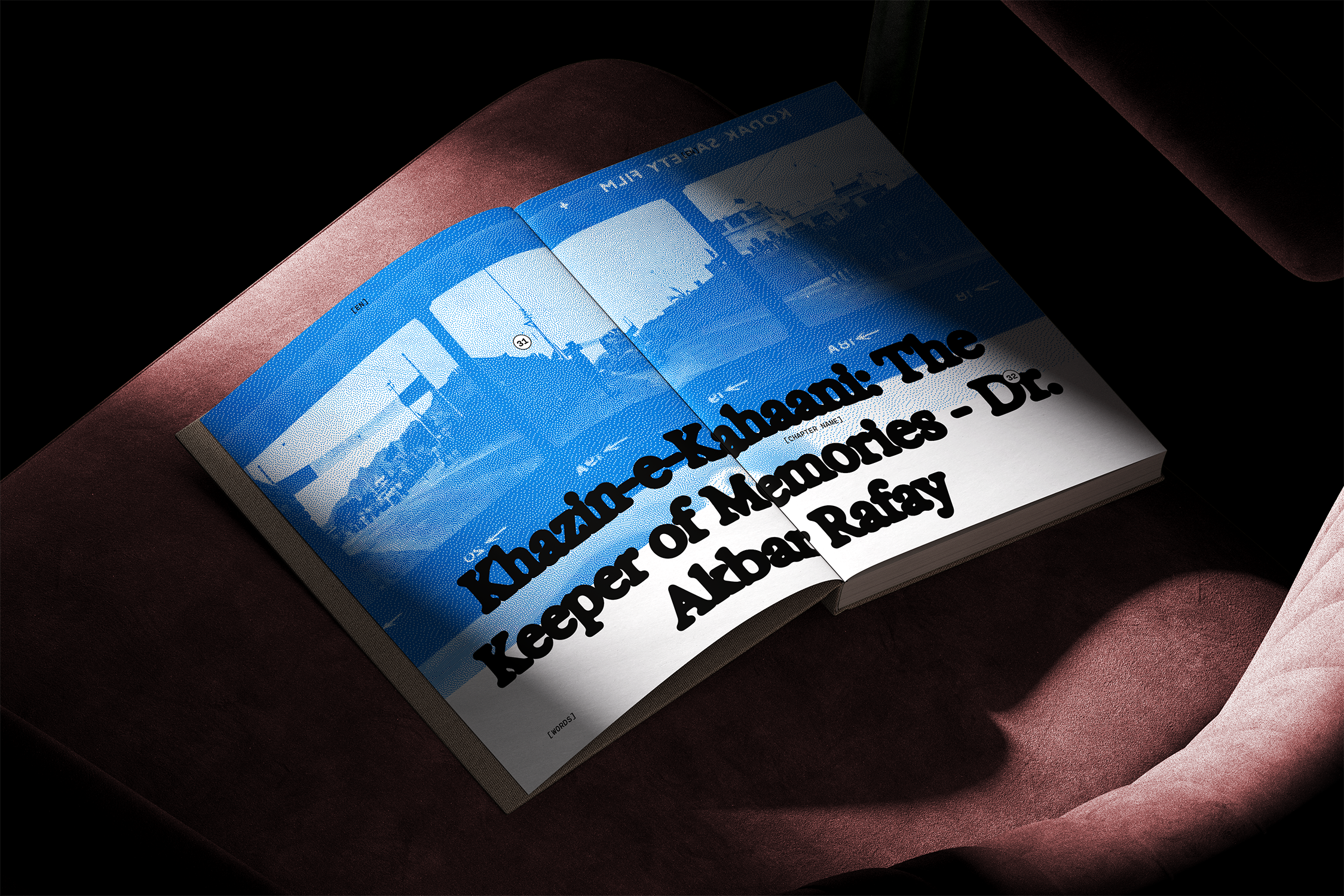
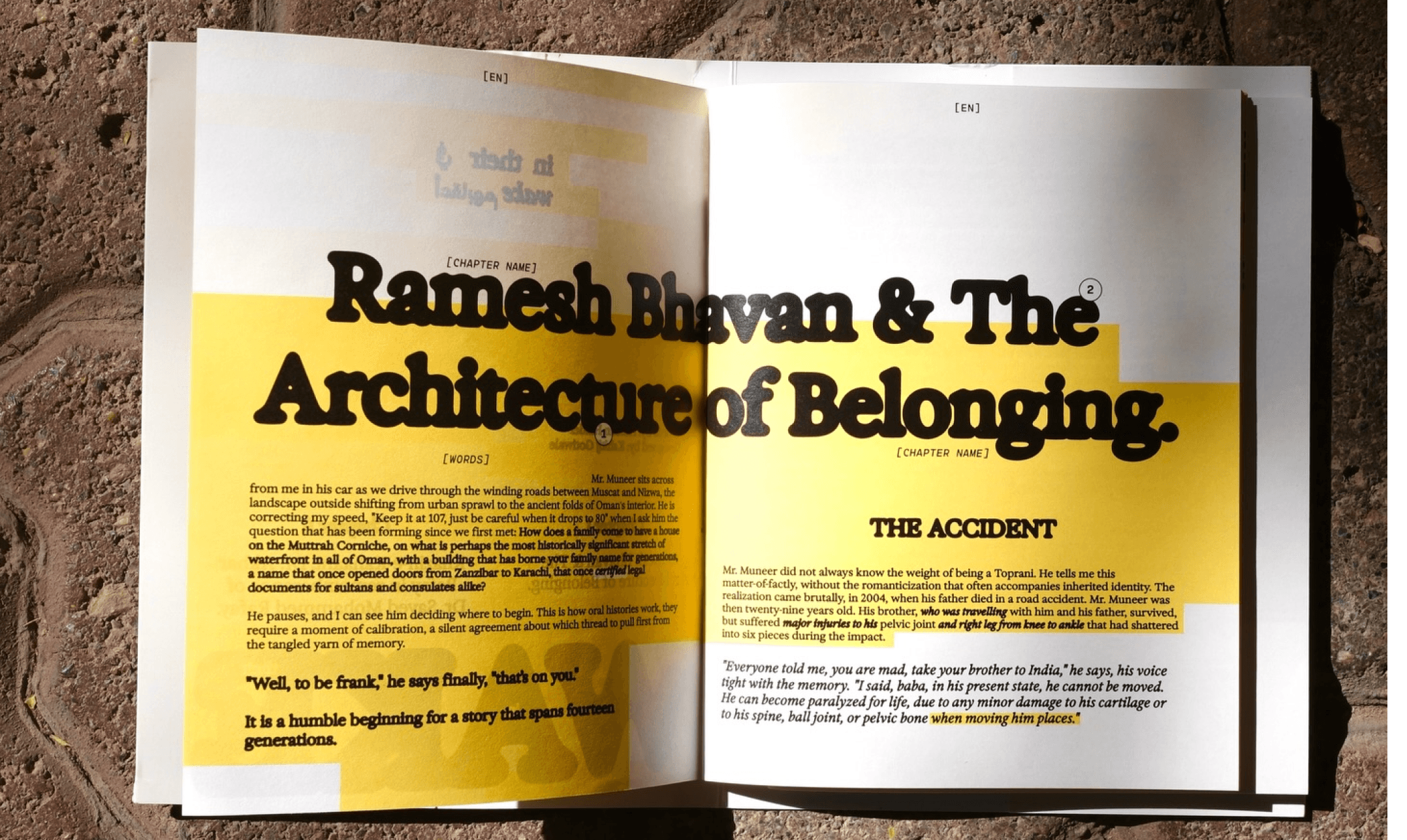
The story survives in fragile things: a 1933 British India passport, handwritten ledgers, trade tickets, a portrait worn soft by handling.
Rather than present them as faded relics, I ran the archive through a high-contrast dithered duotone, black on a single insistent yellow, so a hundred years of documents read as one living body. Not history under glass. History still happening.
Built to speak in more than one tongue
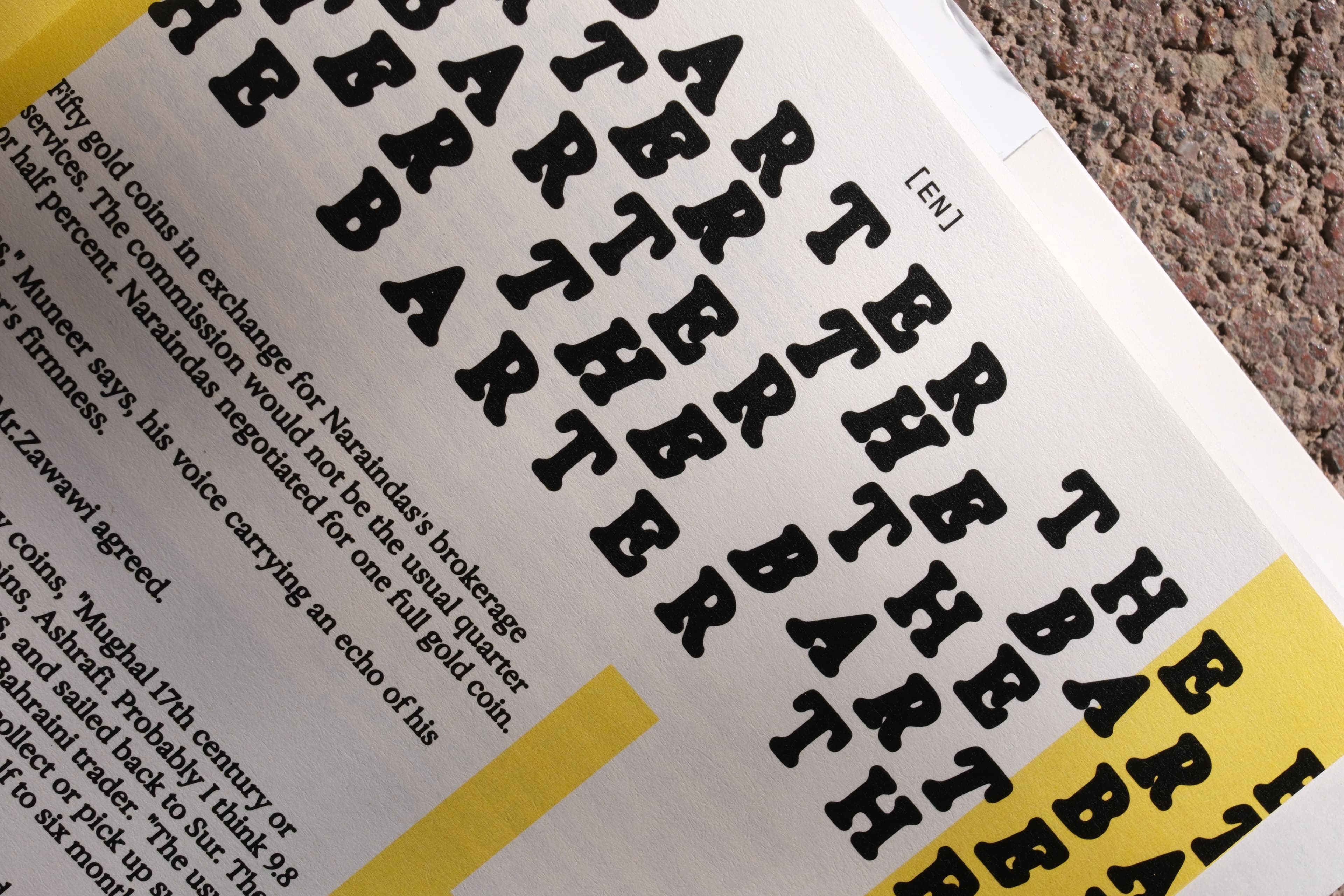
This is a migration story, and migration is multilingual by nature, Kutchi, Gujarati, Arabic, English, all in the same mouth.
The publication is built to hold that. The [EN] marker on every page is a quiet promise that this edition is one of several, that the story can be read in the languages it was actually lived in, not flattened into one.
A migration story that speaks only one language has already lost half of itself.
Migration both preserves and erases. Most families lose the thread somewhere in the middle generations, between the country left behind and the one that becomes home.
This book is design in service of memory: making sure that, for one family at least, the thread holds. That's the whole job. To leave something that lasts as long as the house on the Corniche.